
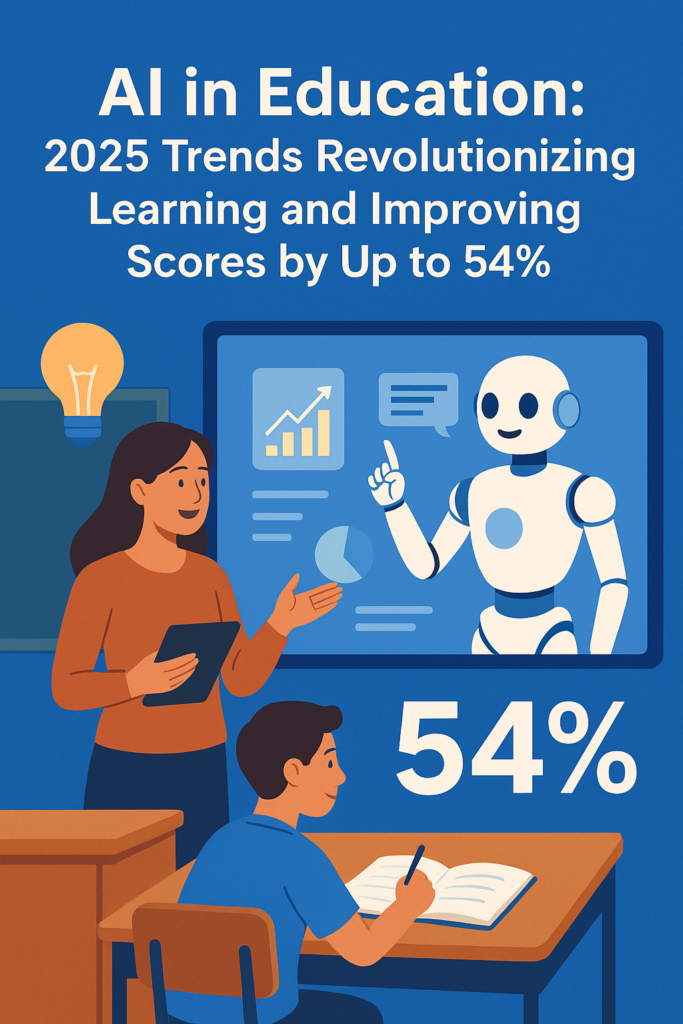
I can still recall the occasion when one of my students improved their math test score by 54% compared to any previous attempt. This wasn’t due to me suddenly transforming into an instructor overnight. The reason was an AI tutor who had been quietly working with him at 10 p.m. Over the six weeks patiently clarifying fractions, in the precise manner that finally resonated with his understanding.
That instant repeated millions of times captures the essence of 2025 in classrooms globally.
This year AI transitioned from a gadget to an essential element. Over half the students I speak with—54% in surveys—report using it weekly not to deceive, but to grasp concepts. They aren’t waiting for educators to adapt; they’re leading the way.. Frankly? The data is compelling: students involved in AI-enhanced programs perform 54% better on average remain in school longer and genuinely appreciate the experience.
What has changed now is the level of personalization. The software monitors how a child approaches learning—does she review explanations times? Does he breeze through images. Get stuck on written content?—and adjusts the lesson instantly. One of my reserved pupils, who hardly ever spoke during class began debating with an AI, about Shakespeare at 2 a.m. Because it asked her what she believed Juliet ought to have done differently. She messaged me the day: “Miss I didn’t realize my opinions were this strong.”
Instructors aren’t being substituted; we’re gaining liberation. Assessing 120 essays once swallowed my Sundays. Currently AI manages the review highlights the most compelling thesis statements identifies those having trouble with commas and allows me to dedicate my weekend to crafting meaningful feedback. I can now recognize when a student’s tone turns dull or when a child who normally shines in science becomes silent, across three consecutive tasks.
What’s most exciting? It’s beginning to impact everyone. Children with dyslexia receive text that is read aloud in a sounding voice rather than a robotic one. Learners of English as a second language engage in conversations with an AI that remains endlessly patient. A boy I taught year at a rural school with only one overwhelmed counselor now has an AI that kindly follows up when it sees he hasn’t turned in assignments, for four days.
Naturally it isn’t flawless. Occasionally the AI becomes overly assured and makes mistakes. Sometimes students rely on it excessively. Lose touch with the challenge—the skill that develops genuine thinking. That’s why the advanced schools this year aren’t prohibiting it; they’re instructing students on how to critically evaluate it how to detect when it’s fabricating information and how to engage with it as a debate partner rather than depend on it completely.
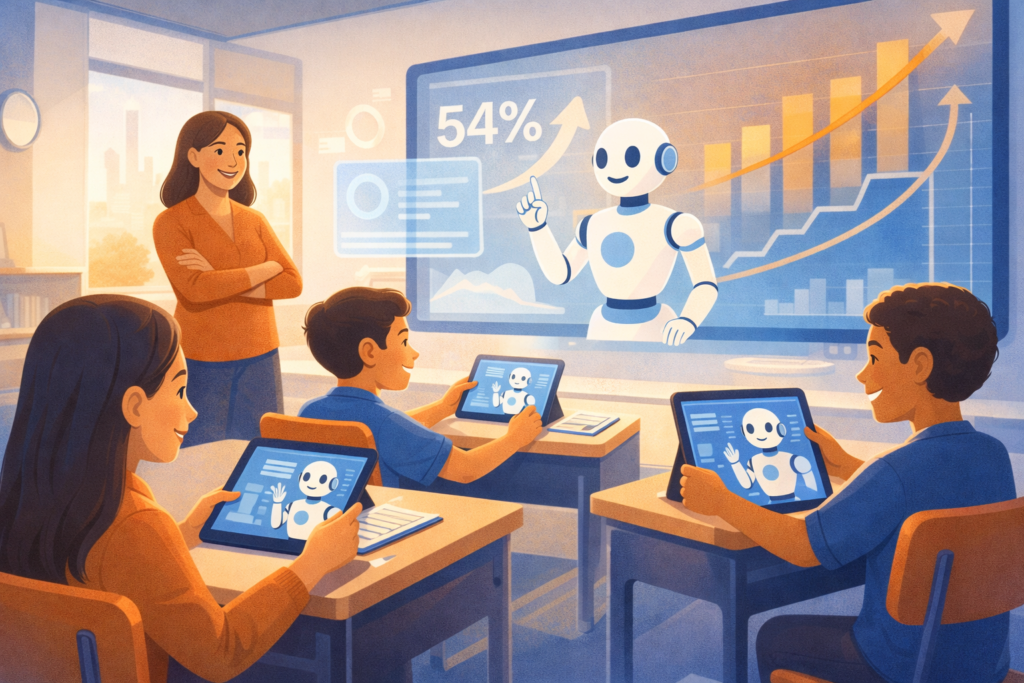
Navigating corridors in 2025 has an atmosphere. There’s increased conversation, discussions more students lingering after lessons driven by enthusiasm rather than falling behind. The dashboards show 54% improvements, 10× involvement, plummeting dropout figures. Yet the metrics fail to reveal the expression on a child’s face when they grasp—, for the first time—that education can be theirs to own not merely something that happens to them.
That’s the real revolution. And it’s just getting started.
Agreed 100%
Thanks